
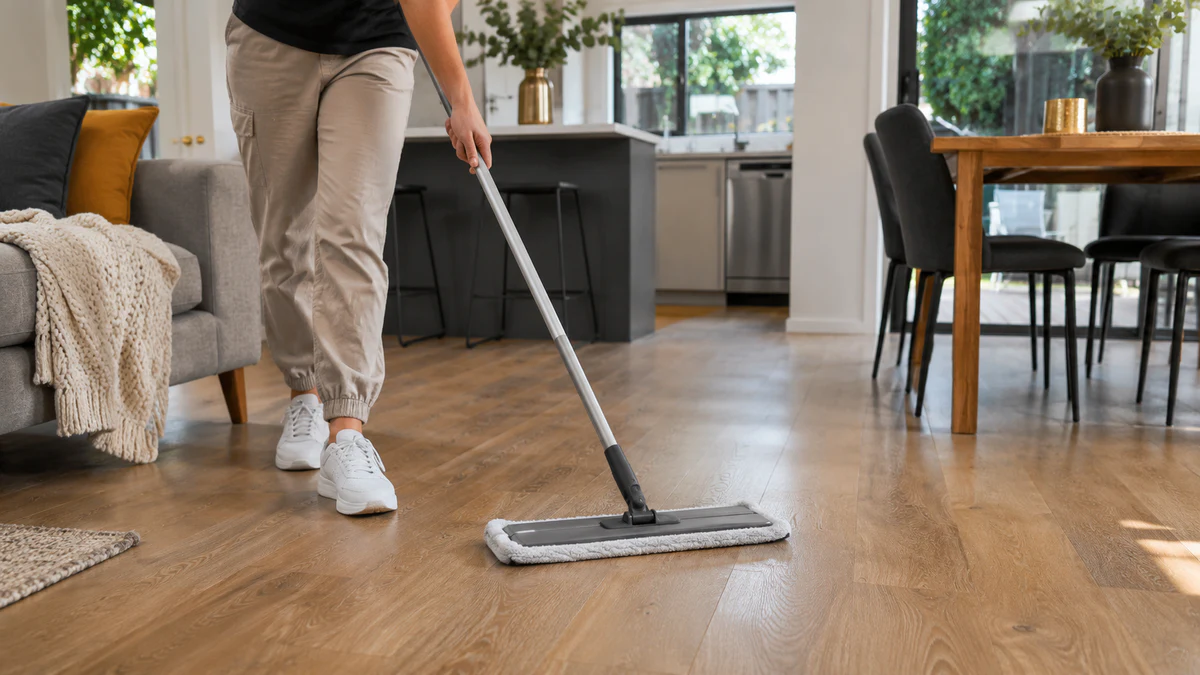
Many newer homes across Melbourne's west have hybrid, laminate or vinyl plank flooring through their open-plan living areas, often with tiles in wet areas and carpet in bedrooms. Each surface needs slightly different care in a busy family home. The wrong mop, too much water or an incompatible product can leave streaks, swollen joins or a dull finish. Safe hard floor cleaning starts by identifying the material, removing abrasive grit and following the floor manufacturer's care guide. This practical guide explains day-to-day methods for timber, engineered timber, laminate, hybrid and vinyl floors, plus when ordinary mopping may not be enough.
Quick Answer: What's the Best Way to Clean Hard Floors?
Remove grit first with a soft-bristle broom or a vacuum head approved for the surface. Mop with a clean, damp—not wet—microfibre mop and a correctly diluted pH-neutral cleaner compatible with the floor. Dry puddles immediately. Always check the flooring care guide before using steam, strong chemicals or an abrasive tool.
What Type of Floor Do You Have?
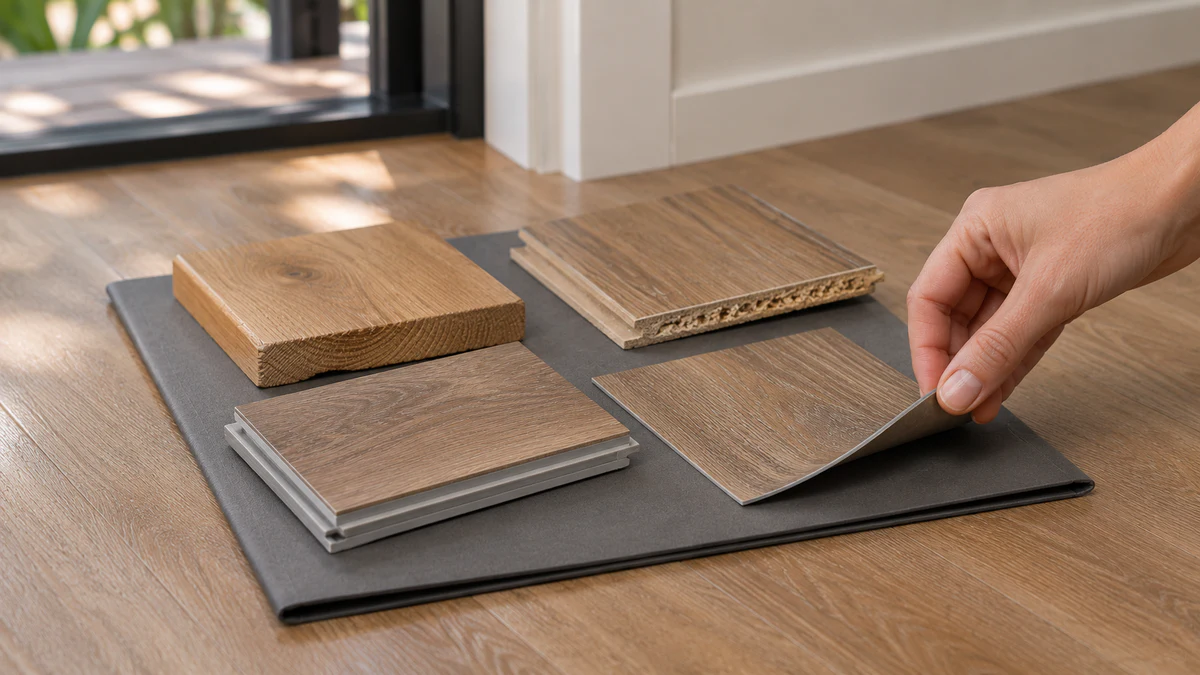
Check the builder's handover pack, flooring invoice, lease or entry condition report first. Otherwise, inspect an exposed edge beside a doorway, vent or skirting gap. Solid timber is wood through its thickness; engineered timber has a real timber top over layers; laminate has a printed surface over fibreboard; hybrid commonly has a rigid core; and vinyl is more flexible. Sound and feel are only clues. Record any product name and obtain its current care guide.
Hard Floor Cleaning at a Glance
| Floor type | How to clean | What to avoid | Steam mop? |
|---|---|---|---|
| Solid timber | Soft-head vacuum; lightly damp mop; compatible cleaner | Water, harsh chemicals, scratches | Check the care guide |
| Engineered timber | Remove grit; use minimal moisture | Wet joins, wax, abrasive pads | Check the care guide |
| Laminate | Vacuum; use a well-wrung mop | Excess water and polish | Commonly not recommended |
| Hybrid | Soft-head vacuum; damp mop | Puddles, wax, oil | Check the care guide |
| Vinyl plank | Vacuum; damp mop; spot-treat scuffs | Abrasives and solvents | Check the care guide |
| Tiles | Vacuum; use a tile-compatible cleaner | Acid on natural stone | Check the care guide |
| Polished concrete | Remove grit; use a sealer-compatible cleaner | Acid and abrasives | Check the sealer guide |
Manufacturer instructions and warranty conditions take priority because coatings, joins and sealers differ even within the same broad floor category.
How to Clean Timber and Engineered Timber Floors
For timber floor cleaning, remove grit with a soft broom or non-scratching vacuum head. Use a barely damp microfibre mop and the care-guide cleaner. Wipe spills promptly so moisture does not sit at board edges.
Use clean doormats and felt pads, and lift furniture. A dull or worn coating may not be dirt. If careful cleaning does not improve it, ask a flooring specialist about recoating or repair; cleaning cannot replace a damaged finish.
How to Clean Laminate Floors
Laminate floor cleaning requires little moisture because water entering joins can swell the fibreboard core. Vacuum, clean a small area with a well-wrung mop, collect droplets and let it dry. Many manufacturers advise against steam because heat and moisture can affect joins.
To prevent streaks, use less detergent, change cloudy water and use a clean mop head. Avoid wax or polish unless the care guide permits it; either can create a patchy film.
How to Clean Hybrid Floors
Hybrid flooring combines a decorative wear surface with a rigid composite core, creating timber-look planks common in newer estates. Vacuum grit with a soft head, then use a damp microfibre mop and compatible diluted cleaner. Do not leave puddles at board edges.
Wax, oil and excess detergent can leave cloudy residue. Check the product guide before using steam because some manufacturers exclude it.
How to Clean Vinyl Plank and Sheet Vinyl
For vinyl plank floor cleaning or sheet vinyl, vacuum first, then damp mop with a compatible cleaner. Treat scuffs with a soft cloth and a label-approved product; avoid solvents, rough scrubbers and aggressive powders. Dry spills near edges and seams.
Strip-and-seal suits only compatible resilient floors, not every modern vinyl plank. Niks Elite Cleaning has not confirmed this service, so check the flooring system and agree on scope first.
Tiles and Polished Concrete
Vacuum tiles before mopping. Grout, natural stone and polished concrete sealers need compatible products; acids can damage stone or dull finishes. See our Point Cook tile and grout cleaning guide for deeper tile care. Specialist polished-concrete treatment is not a confirmed Niks Elite Cleaning service.
How to Get Streak-Free Floors
Streaks often come from excess product, dirty water, a loaded mop head, direct sunlight or cleaner residue:
- Vacuum the full floor first.
- Dilute compatible cleaner exactly as labelled.
- Work in small sections with a clean, well-wrung microfibre head.
- Replace dirty water and mop heads.
- Avoid direct sun; rinse only when the care guide allows it.
- Ventilate gently and keep traffic off while drying.
Protect Your Floors Between Cleans
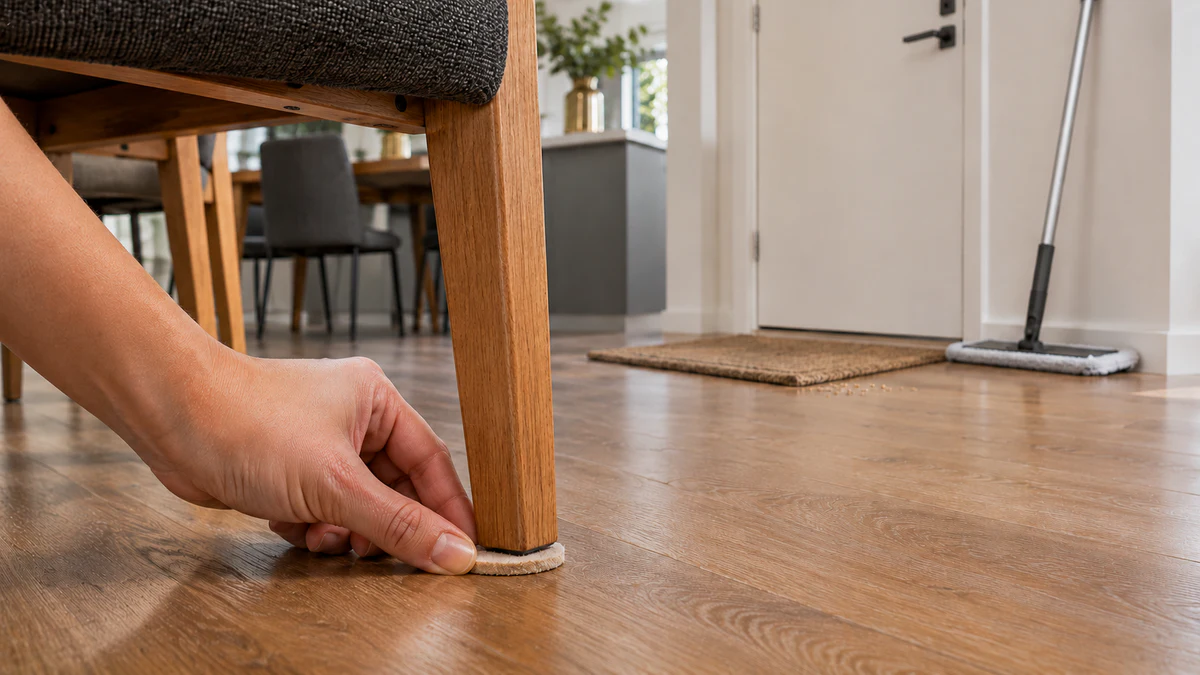
Place doormats outside and inside entries, and leave shoes at the door. Sand from coastal walks and grit from parks act like sandpaper, so vacuum before mopping. Fit felt pads under furniture, replace gritty pads, trim pets' nails and wipe spills promptly. Pet households can also use our Melbourne pet cleaning routine.
When to Book a Professional Floor Clean
Professional help can suit moving in or out, renovation dust, pre-sale preparation, or floors that remain grimy after careful mopping. Use the Melbourne end-of-lease checklist for handover tasks, the move-in cleaning checklist before unpacking, or request a tailored deep clean in Melbourne. For ongoing upkeep, compare weekly and fortnightly house cleaning.
Cleaning cannot reverse swelling, worn coatings, deep scratches or failed sealers; these may need a flooring specialist.
Floor Cleaning Prices
Cost depends on area, material, condition, access and scope. No approved prices or times were supplied, so request an itemised AUD quote.
| Service | Price | Typical time |
|---|---|---|
| Hard-floor tasks within a tailored deep clean | Request a quote | Confirmed with quote |
| Regular clean, 3-bedroom home, including agreed hard floors | Request a quote | Confirmed with quote |
| Tile and grout cleaning, per m² | Request a quote | Confirmed with quote |
| Vinyl strip and seal, per m² | Availability and price to confirm | Confirmed with quote |
Serving Melbourne's West
Niks Elite Cleaning serves Point Cook, Werribee, Tarneit, Hoppers Crossing, Williams Landing, Truganina, Altona Meadows and Laverton. Open-plan homes can carry grit from entries into living areas, while coastal outings bring sand inside. Vacuuming before mopping helps limit scratches.
Book a Hard Floor Clean With Niks Elite Cleaning
Our insured, police-checked team can include agreed hard-floor tasks in a tailored regular, deep, move-in or end-of-lease clean. Share the floor type, condition, area and care guide. We will confirm scope in the quote; cleaning cannot repair damaged coatings, swollen planks or failed sealers.
Request a tailored hard-floor cleaning quote
Frequently Asked Questions
Can you use a steam mop on laminate or hybrid floors?
Many laminate manufacturers advise against steam because heat and moisture can enter joins and cause swelling. Advice for hybrid flooring varies. Check the manufacturer's care guide and warranty before using steam; when uncertain, remove grit first and use a well-wrung microfibre mop.
What's the best cleaner for hybrid floors?
Use the cleaner recommended in the flooring care guide. A correctly diluted, pH-neutral cleaner for sealed floors suits many hybrid products, but the manufacturer's instructions take priority. Avoid wax, oil and excessive detergent unless specifically permitted because residue can leave the floor dull or slippery.
How do I stop my floors looking streaky after mopping?
Vacuum first, use less solution and work with a clean, well-wrung microfibre head. Replace dirty water instead of spreading it, and avoid direct sunlight. If the care guide allows it, make a final pass with clean water, then let the floor dry with gentle ventilation.
Is vinegar safe for cleaning floors?
Not on every floor. Vinegar is acidic and can dull sealed finishes or damage acid-sensitive natural stone. It may also conflict with a warranty. Use the product and dilution recommended by the floor manufacturer; if the material is unknown, seek advice before cleaning the whole room.
How often should I mop hard floors?
Weekly is a practical starting point for many homes, with prompt spot cleaning for spills. Busy entries, children, pets or sand may require more frequent vacuuming and mopping; low-use rooms may need less. Remove grit regularly because particles can scratch a finish even when the floor looks clean.
How do I know what type of flooring I have?
Check the builder's handover pack, flooring invoice, lease, condition report or landlord information. If unavailable, inspect an exposed edge near a doorway, vent or skirting gap and compare the core and surface with flooring documentation. Sound and feel offer clues, but are not definitive.
Do you check the floor type before cleaning?
A standard floor-identification policy has not been confirmed. When requesting a quote, name the floor, share its care guide or builder paperwork, and include clear photos of the surface and an exposed edge. Confirm the agreed scope and product compatibility before the appointment if the material remains uncertain.
Clean the Floor You Have, Not the Floor It Resembles
Identify the material, remove grit, limit moisture and follow the care guide. For a tailored scope in Melbourne's west, call Niks Elite Cleaning on +61 493 519 401 or request a quote online.